
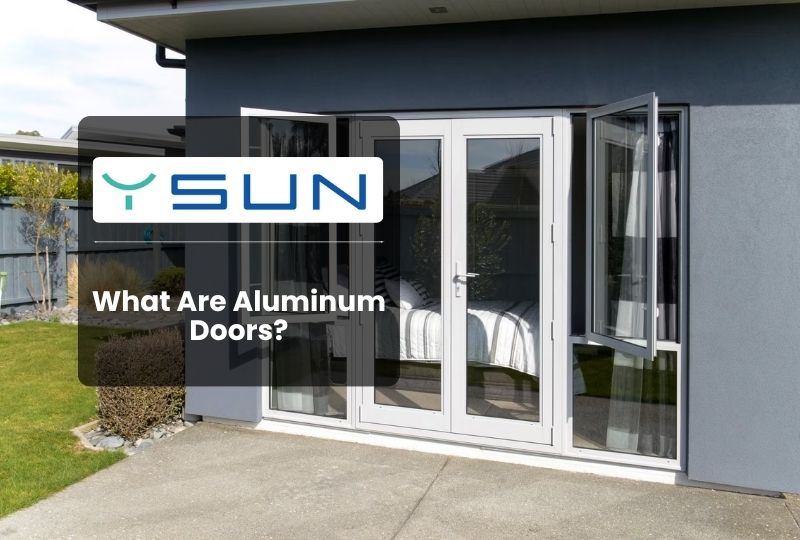
If you have shopped for doors recently, chances are you came across the term aluminum door more than once. Aluminum doors have become one of the most requested products for homes, offices, and commercial buildings across the UAE and the wider GCC region. But what exactly are they, and why do architects, contractors, and homeowners keep choosing them over wood, steel, or uPVC?
This guide covers everything you need to know: what aluminum doors are made of, the main types available, their real advantages and limitations, and what to consider before buying one for your project.
What Is an Aluminum Door?
An aluminum door is a door built with a frame made from aluminum, an extremely lightweight yet strong metal. The frame is usually paired with glass panels, aluminum panels, or a mix of both, and finished with a powder coating that gives it color and protection.
Aluminum itself does not rust, does not rot, and does not warp with heat or moisture the way wood can. That single property is a big reason aluminum doors are so common in hot, humid, or coastal climates like the UAE, where wooden doors tend to swell, crack, or lose their shape within a few years.
Modern aluminum doors are also built with thermal break technology. This means the frame has an insulating barrier between the outer and inner sections of aluminum, which reduces heat transfer. For buildings in the Gulf, where cooling costs make up a large part of energy bills, this feature matters a lot.
Main Types of Aluminum Doors
Aluminum doors are not a single product. They come in several designs, each suited to a different purpose.
Aluminum Sliding Doors
Aluminum Sliding doors move horizontally along a track instead of swinging open. They are a popular choice for balconies, terraces, and spaces where floor area is limited. Because the frame profile can be kept slim, sliding doors also allow for large glass panels, which bring in more natural light while keeping the structure secure.
Aluminum Folding or Bi-Fold Doors
Bi-fold doors are made of several panels connected by hinges, and they fold neatly to one side when opened. They are commonly used to connect indoor living spaces with gardens, patios, or pool areas, since they can open up an entire wall. This type works particularly well for villas and outdoor entertaining areas.
Aluminum Hinged or Casement Doors
This is the traditional swing door format, built with two to four hinges attached to the frame. It remains the standard choice for main entrances, interior doors, and areas where a classic opening mechanism is preferred over sliding or folding.
Aluminum French Doors
French doors are a pair of hinged doors that open from the center, usually featuring large glass sections. They are often chosen for their symmetrical, elegant look and are commonly installed at the entrance to gardens or formal living areas.
Aluminum Louvre Doors
Louvre doors have angled slats built into the panel, allowing air to pass through while blocking direct sun and rain. They are frequently used in utility areas, storage rooms, and outdoor spaces that need ventilation without full exposure.
Security and Blast Resistant Aluminum Doors
For commercial buildings, government facilities, and high-security sites, reinforced aluminum doors with heavy-duty locking systems are available. Some are rated to resist forced entry, and specialized versions are engineered to meet blast resistance standards for sensitive facilities.
Key Benefits of Aluminum Doors
Corrosion and rust resistance. Unlike steel, aluminum does not rust, and unlike wood, it does not rot or swell from moisture. This makes it well suited to the UAE’s heat, humidity, and occasional sandstorms.
Strength with a lightweight structure. Aluminum offers a strong strength-to-weight ratio, which allows manufacturers to build slim frames that still hold large glass panels safely.
Low maintenance. A wipe down with mild soap and water is usually enough to keep aluminum doors looking new. There is no need for repainting, sealing, or the regular upkeep that wood requires.
Design flexibility. Aluminum can be powder-coated in a wide range of colors and finishes, including wood-look finishes, which means the door can match almost any architectural style without sacrificing durability.
Energy efficiency. With thermally broken profiles and the right glazing, aluminum doors can help reduce indoor heat gain, which supports lower air conditioning costs in warm climates.
Long lifespan. A well-made aluminum door can last for decades with minimal wear, making it a solid long-term investment compared to materials that degrade faster.
Sustainability. Aluminum is fully recyclable and can be reused without losing its properties, which appeals to projects with sustainability requirements.
Are There Any Downsides?
Aluminum doors do have a few limitations worth knowing before you buy.
Without a thermal break, standard aluminum can conduct heat and cold more than uPVC, though most quality manufacturers now include thermal break technology to solve this. Aluminum doors also tend to cost more upfront than basic uPVC options, although the lower maintenance and longer lifespan often balance this out over time. Finally, proper installation matters. A door that is not fitted correctly can affect sealing and insulation performance, so working with an experienced supplier is important.
Aluminum Doors vs Wood, Steel, and uPVC
Wood doors offer a warm, natural look but require regular painting, sealing, and repairs, especially in humid or hot climates where warping is common. Steel doors are strong and often more affordable, but they are prone to rust over time, particularly near coastal areas. uPVC doors are budget-friendly and offer decent insulation, but they cannot match the strength or the slim, modern frame profiles that aluminum allows for larger glass installations.
For hot and humid climates like the UAE, aluminum generally strikes the best balance between durability, appearance, and long-term value.
Choosing the Right Aluminum Door
A few questions can help narrow down the right option for your project.
What is the door for? An entrance, a balcony, a garden connection, or a high-security area will each point toward a different type.
How much natural light do you want? Sliding and French doors allow for larger glass sections, while louvre or panel doors offer more privacy.
What finish suits the building? Powder-coated colors and wood-look finishes can be matched to the surrounding architecture.
Does the climate call for thermal break profiles? In most GCC locations, this is worth prioritizing for both comfort and energy savings.
A Note on Sourcing
If you are planning a project in the UAE or GCC, YSUN by Yuandong supplies aluminum doors, windows, and outdoor aluminum systems designed for the region’s climate, with the full range viewable at aluminiumsunrise.com.
Frequently Asked Questions
Are aluminum doors good for hot climates like the UAE?
Yes. Aluminum does not warp, crack, or rot in heat and humidity the way wood can, and thermally broken profiles help limit heat transfer into the building.
How long do aluminum doors last?
With proper installation and basic care, aluminum doors commonly last several decades, since the material resists rust and does not degrade the way other materials do.
Are aluminum doors expensive?
They usually cost more upfront than basic uPVC doors, but their long lifespan and minimal maintenance needs often make them more cost-effective over time.
Can aluminum doors be customized in different colors?
Yes. Powder coating allows aluminum doors to be finished in a wide range of colors, including matte, metallic, and wood-look finishes.
What is the difference between sliding and folding aluminum doors?
Sliding doors move along a track and are ideal for smaller spaces, while folding doors stack to one side and can open up an entire wall, which works well for larger outdoor connections.